Demolition is often one of the first steps in a renovation project, but it can also be one of the most unpredictable. Behind walls, above ceilings and beneath existing finishes, conditions may not always match the drawings or what was anticipated before work began.
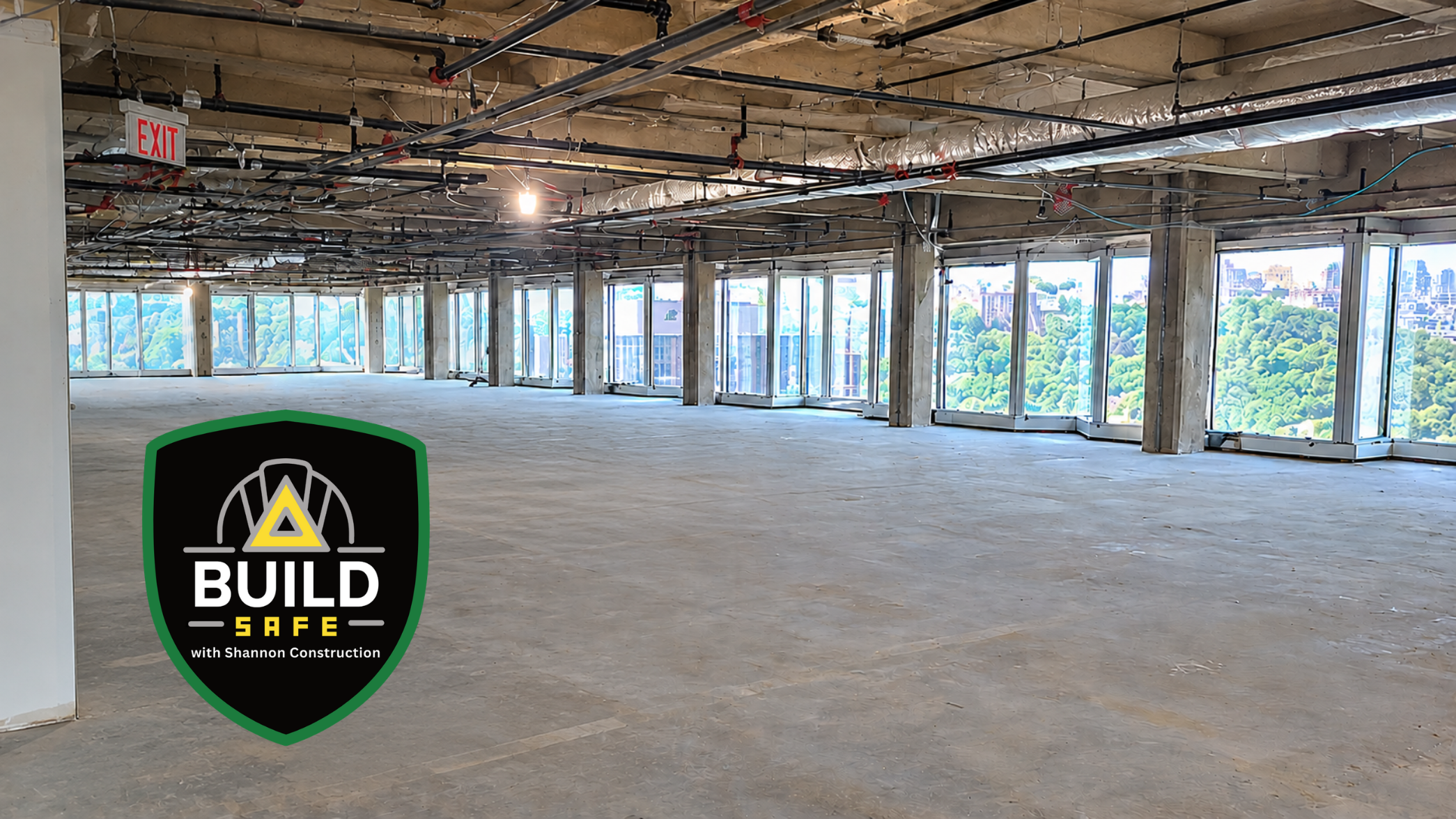
As part of our BuildSafe Program, Shannon Construction’s Safety Committee continues to reinforce demolition safety practices across our project teams. The focus is straightforward: plan the work carefully, understand the conditions before demolition begins and be prepared to stop and reassess when something unexpected is uncovered.
Make Safe Before Demo Begins
Before demolition starts, project teams should confirm that utilities within the work area have been properly identified and isolated. Electrical, plumbing, mechanical and other building systems can remain concealed within walls, ceilings and floors.
Before work begins, teams should:
- Verify utilities have been properly identified and made safe.
- Review the demolition scope and existing conditions.
- Confirm what is being removed and what needs to remain.
- Identify potential hazards within and adjacent to the work area.
- Communicate the demolition plan and any known concerns with the team.
Taking these steps helps reduce the risk of damaging active utilities, structural elements or adjacent construction.
Verify Structural Conditions
Selective demolition requires careful attention to the building’s existing structure. Before removing walls, ceilings, framing or other building components, crews need to understand how that work could affect surrounding conditions.
Teams should watch for:
- Conditions that differ from the drawings or anticipated construction.
- Unexpected framing or structural components.
- Signs that an element may be supporting adjacent construction.
- Changes in conditions as demolition progresses.
When there is uncertainty, stop the work and verify the condition before proceeding.
Use the Right PPE for the Task
Demolition activities can expose workers to sharp materials, flying debris, dust and elevated noise levels. PPE should be selected based on the specific task and conditions.
Depending on the work, this may include:
- Eye and face protection.
- Task-appropriate gloves, particularly when handling glass or sharp materials.
- Hearing protection.
- Respiratory protection when required.
- Standard jobsite PPE appropriate for the demolition activity.
Maintain a Clean, Controlled Work Area
Debris can accumulate quickly during demolition, creating additional hazards if the work area is not managed throughout the day.
Good demolition housekeeping includes:
- Keeping walkways and access points clear.
- Removing debris regularly rather than allowing it to accumulate.
- Properly handling and disposing of sharp or broken materials.
- Maintaining separation between demolition activities and occupied or active areas.
A clean work area gives crews better visibility and helps everyone move safely through the space.
When Conditions Change, Stop and Reassess
Even with careful planning, demolition can reveal conditions no one expected. A concealed utility, unusual structural condition or material that does not match the drawings can change how the work needs to proceed.
That is why one of the most important reminders is also one of the simplest:
If something doesn’t look right, stop and reassess.
Every member of the Shannon Construction team has the authority to stop work when an unexpected condition or safety concern is identified. Work should only resume once the condition has been evaluated and the team understands how to proceed safely.
Demolition safety starts with planning, communication and making sure everyone understands the work before it begins. Through our BuildSafe Program, Shannon Construction continues to reinforce these practices so our teams can recognize changing conditions, communicate concerns and make safe decisions in the field.