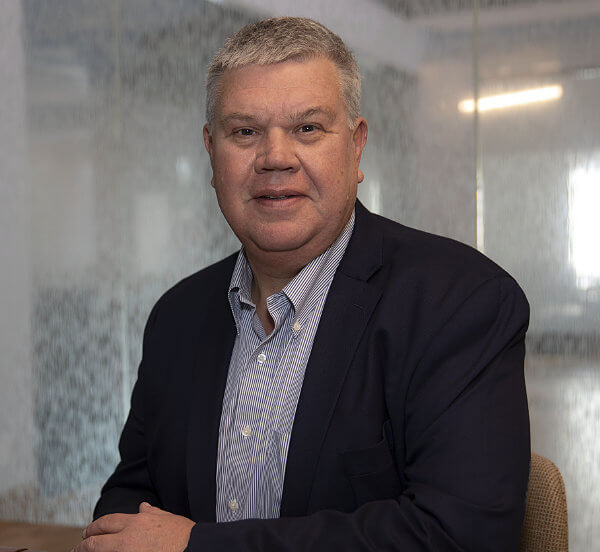
In this Shannon Spotlight interview, President Ken Schultz shares insights on major construction trends, the Pittsburgh market outlook, and how Shannon Construction is positioning for long-term success heading into 2026 and beyond.
When you look ahead to 2026 and beyond, what trends do you think will shape the construction industry nationally and globally?
Nationally, federal funding passed in 2025 for transportation and infrastructure will continue driving public-sector work. We’re also seeing strong activity around data centers, warehouses, and energy projects across the country. Those sectors are creating real opportunity, but they also highlight one of the industry’s biggest challenges: the ongoing shortage of skilled labor.
For a long time, college degrees were pushed as the only path to a stable career. Now we’re seeing the impact of that. The good news is that construction and the trades are being recognized again as viable and rewarding options, especially for young people.
Higher interest rates have also changed behavior across the industry. Owners and developers are being more disciplined and selective, which I see as a healthy correction. Work tied to infrastructure, healthcare, higher education, energy, and adaptive reuse will continue to move forward both nationally and globally.
We’re also seeing change in education. Some colleges and universities are consolidating or closing, while others are absorbing students and rebalancing enrollment. That shift tends to create renovation and repurposing work rather than large-scale new construction. Technology will also continue to influence how projects are planned and delivered.
What’s your outlook for construction in the greater Pittsburgh area over the next few years?
“Pittsburgh continues to be a steady, resilient market—and that consistency has always been one of the region’s strengths.
Pittsburgh continues to be a steady, resilient market. We don’t see the extreme ups and downs that some larger cities experience, and that consistency has always been one of the region’s strengths.
A big factor right now is the correction we’re seeing after 10 to 12 years of artificially low interest rates and inflated property values. In the office market especially, many buildings were financed with interest-only loans when rates were low. Owners didn’t pay down principal, and now those loans are resetting at much higher rates.
As a result, original owners are selling at a loss, and new buyers are stepping in at much lower valuations. That creates opportunity. With a lower basis in the building, new owners can invest in upgrades, renovations, and amenities while still offering competitive rents for Class A office space. That reinvestment is driving renovation work and aligns well with what we do.
On the education side, we’re seeing similar dynamics. As some colleges and universities consolidate or close, the institutions that remain are adjusting to rebalance enrollment. That typically leads to renovation, modernization, and space reconfiguration. In K–12, we’re seeing more variety in educational models and continued growth in public charter and alternative education. Locally, organizations like our client, CCA, continue to grow and invest in their facilities, creating opportunity in that sector.
Overall, I expect moderate, steady activity driven by reinvestment rather than speculative growth, and that plays to Shannon’s strengths.
What do you think sets Shannon apart?
What sets Shannon apart is how we work with our clients. Our service delivery model is built around understanding their needs, both physically and financially, and being forthright and honest throughout the process. We believe our clients do best when expectations are clear, and when they succeed, we succeed.
That approach starts early. We spend significant time during preconstruction understanding the budget and working with owners, landlords, and architects to find creative alternatives to standard construction approaches. The goal is always the same: to make the deal work and deliver the right product at the right price.
Our most successful projects are the ones where we’re involved early. That collaboration helps manage risk, align expectations, and create better outcomes for everyone involved.
“Our most successful projects are the ones where we’re involved early.
As you plan for the next few years, how do you think about balancing new opportunities with potential risk?
It comes down to being realistic and selective. We look closely at the client, the scope, the risk, and whether a project truly fits our capabilities. Growth for the sake of growth doesn’t make sense. We’re focused on opportunities that support long-term stability for the company and our people while still delivering the level of quality our clients expect.
How are you making sure Shannon is set up for the long term, both from a leadership and business standpoint?
Long-term success means planning ahead and being intentional. We’re investing in people, developing leaders at all levels, strengthening internal processes, and maintaining strong financial fundamentals. At the same time, we’re focused on leadership continuity so the company is positioned not just for the next few years, but for the next generation.
What are you most proud of when you think about the Shannon team?
I’m most proud that the Shannon team defaults to doing the right thing—every time. Even when it’s difficult, and even when it may cost us money in the short term. That mindset says a lot about who we are as a company. It builds trust with clients and partners, strengthens our culture, and leads to better long-term outcomes.